

An expert panel of sepsis clinicians and researchers selected FloPatch as the leading innovation in sepsis care, recognizing its ability to bring personalized, patient-specific fluid resuscitation to the bedside, backed by peer-reviewed evidence and aligned with evolving clinical guidelines.
LOS ANGELES--(BUSINESS WIRE)--#flopatch--Flosonics Medical received the Paul and Debra Walker Award, part of the Sepsis Research and Innovation Challenge at the Unite for Sepsis Symposium presented by Sepsis Alliance in Washington, D.C. on June 11, 2026. The recognition comes as FloPatch, the company’s FDA-cleared wearable Doppler ultrasound device, has become a trusted tool for bedside fluid responsiveness assessment across a growing number of U.S. emergency departments and intensive care units.
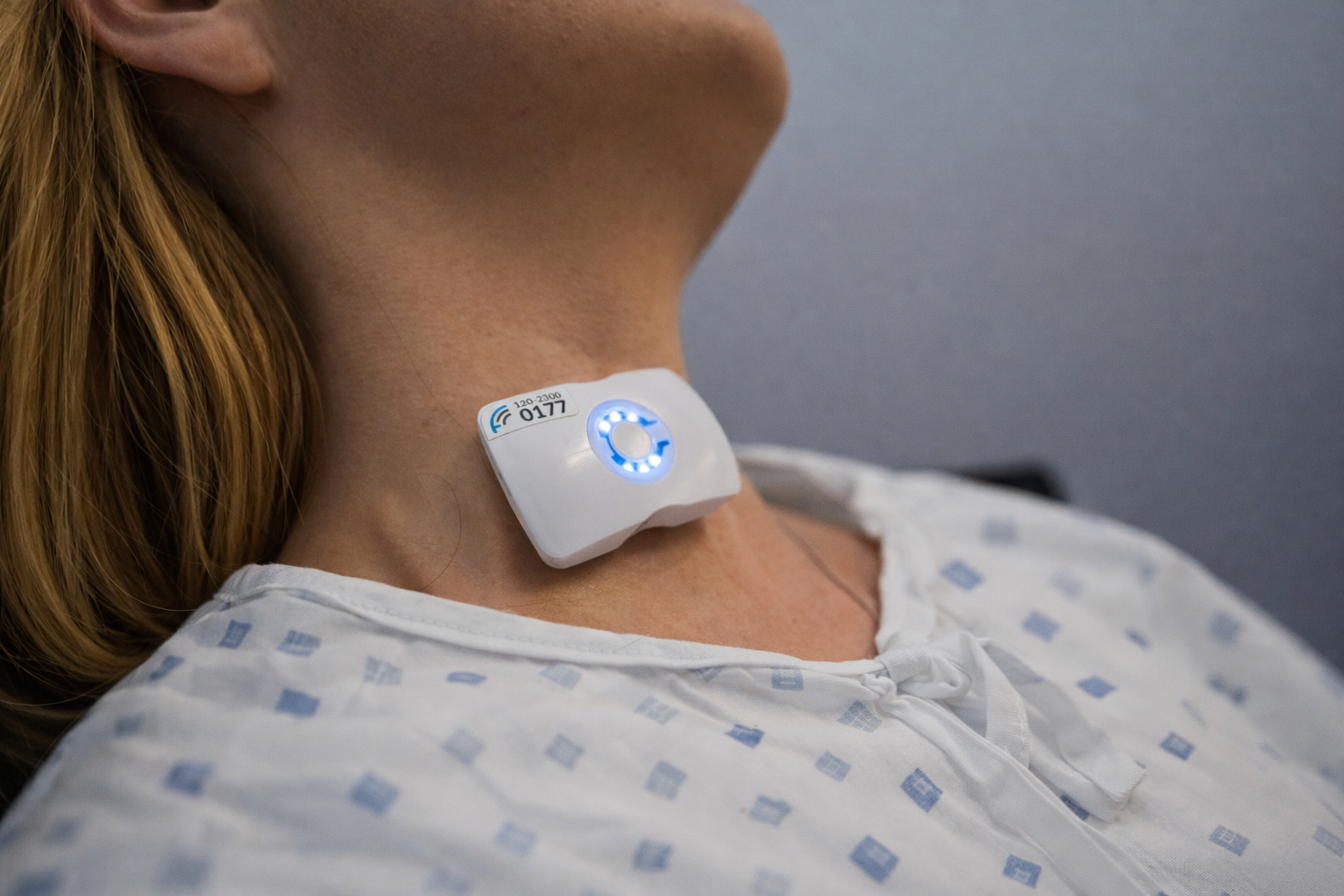

This award recognizes the top innovation transforming sepsis detection, treatment, and patient outcomes. Flosonics earned the honor for FloPatch's ability to bring dynamic fluid responsiveness assessment to any bedside nurse or frontline provider without specialized training, capital equipment, or a wait for an ultrasound technician.
Fluid resuscitation is among the most consequential and most frequently misjudged interventions in sepsis care. Sepsis claims more than 350,000 American adult lives annually,1 and nearly one in three patients with sepsis or septic shock were found to be fluid unresponsive,2 yet most hospitals still lack a reliable bedside method to identify them before fluid overload sets in. Without early identification of fluid unresponsiveness, patients may receive excessive fluids, increasing their risk of serious complications such as pulmonary edema, where fluid accumulates in the lungs. By some estimates, fluid overload can extend the average hospital stay by three days and increase healthcare costs by more than $15,000 per patient.3
This move from fixed protocols toward dynamic, personalized assessment is now reflected across the leading bodies in critical care. The Society of Critical Care Medicine's 2024 guidelines call for critical care ultrasound to guide targeted volume management in sepsis, and both the Surviving Sepsis Campaign and the New England Journal of Medicine have reinforced the move from static markers toward dynamic assessment of fluid responsiveness.4 The Centers for Medicare and Medicaid Services now recognizes carotid flow time, the metric measured by FloPatch, as a SEP-1 compliant indicator of tissue perfusion.5 FloPatch puts the standard of care within reach at every bedside, helping hospitals align with CMS and SCCM guidance, deliver evidence-based sepsis care, and protect reimbursement tied to SEP-1 performance.
"Sepsis has challenged clinicians for decades, not because we lack understanding of the physiology, but because acting on that understanding quickly and precisely at the bedside has remained so difficult. What impressed the panel about FloPatch is that it closes exactly that gap. It takes a critical resuscitation decision, whether a patient will respond to fluids, and makes it answerable in minutes, by any clinician at the bedside. That is the kind of practical, data-driven innovation that makes personalized sepsis care possible at the bedside, and it is why FloPatch was selected for this award," said Paul Walker, MD, of the Paul and Debra Walker Award.
The clinical framework underlying FloPatch adoption is the SaFER (Safe and Fluid Effective Resuscitation) protocol, co-authored by Dr. Kenny and Stanford’s Dr. Carolyn Kaufman and published in SN Comprehensive Clinical Medicine.6 SaFER gives institutions a peer-reviewed, auditable decision pathway for IV fluid management that integrates directly into SEP-1 bundle workflows, providing the clinical infrastructure that sustainable, system-wide adoption requires.
"Critical care ultrasound for IV fluid management is now a Society recommendation; however, for most clinicians this guideline is out of reach - limited by time, training, and access to those practiced in point of care ultrasound. We built FloPatch to put fast, evidence-based, critical care ultrasound for IV fluid management in the hands of any clinician, regardless of their training. To have that work recognized by a panel of leaders in the field is deeply meaningful. It affirms that the future of sepsis resuscitation is individualized and accessible to every patient, not only those treated where advanced expertise happens to be available," said Jon-Emile Kenny, MD, Co-Founder and Chief Medical Officer of Flosonics Medical.
About Flosonics Medical
Flosonics Medical is a medical device company engaged in the research and development of innovative ultrasound technology. Founded in 2015, the company’s mission is to improve patient care and the practice of medicine through technology-enabled solutions and groundbreaking clinical research. For more information, please visit www.flosonicsmedical.com.
References
- Sepsis Alliance. Sepsis Alliance updates key number of annual sepsis casualties. sepsis.org. Published April 27, 2022. https://www.sepsis.org/news/sepsis-alliance-updates-key-number-of-annual-sepsis-casualties/
- Hernández G, Ospina-Tascón GA, Damiani LP, et al; ANDROMEDA-SHOCK Investigators. Effect of a resuscitation strategy targeting peripheral perfusion status vs serum lactate levels on 28-day mortality among patients with septic shock. JAMA. 2019;321(7):654-664. doi:10.1001/jama.2019.0071
- American Hospital Directory. Analysis of FFY2022 Medicare IPPS (MedPAR) claims data. americanhospitaldirectory.com.
- Prescott HC, Antonelli M, Alhazzani W, et al. Surviving Sepsis Campaign: International Guidelines for Management of Sepsis and Septic Shock 2026. Crit Care Med. 2026;54(4):725-812. doi:10.1097/CCM.0000000000007075
- CMS Hospital Inpatient Quality Reporting SEP-1 Specifications v5.18
- Kaufman, C.S., Wu, D., Eibl, J.K. et al. Ultrasonographic Measures of Safe and Fluid Effective Resuscitation (SaFER): Incorporating the VExUS and VTI into Protocolized Care. SN Compr. Clin. Med. 8, 73 (2026). https://doi.org/10.1007/s42399-026-02318-7
Contacts
Media Contact
Jamie Gray, Flosonics Medical, press@flosonicsmedical.com