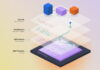

Built by the team behind HEXA Robot and MindOS, with serial consumer tech entrepreneur Ben Zhang as a partner, Vilo's Signal OS reframes wearables as an operating-layer shift — from tracking data to understanding it.
DOVER, Del.--(BUSINESS WIRE)--Most people who own a smartwatch or ring can tell you their heart rate variability score. Few can tell you what to do about it. Vilo's Signal OS is built for that gap.
Vilo, an AI wearable company backed by HSG (formerly Sequoia Capital China), today introduced Signal OS, an AI-native operating system for its upcoming ring-first wearable platform. Designed to move wearables beyond static dashboards and retrospective scores, Signal OS continuously interprets body signals in context, surfacing timely, readable guidance without requiring users to open an app and dig through charts.
As wearable hardware has improved, the industry has largely converged around a familiar model: collect sensor data, display charts, assign scores and use AI to explain results after the fact. Signal OS flips the model by filling that missing interaction layer, moving the category from measurement to meaning.
“Wearables have gotten good at measuring. What’s still missing is meaning,” said Gee Gu, founder and CEO of Vilo. "Signal OS is built to move the category beyond dashboards and scores toward a more contextual, quietly proactive operating system for the body — one that helps people understand what has changed, prioritize what matters and turn body signals into support."
Vilo is led by Gee Gu and Andy Xu, who previously built HEXA Robot and MindOS, an early robotics operating system that included SDKs, control systems and interaction logic. That experience building software that translates machine inputs into meaningful, real-time outputs maps directly to the problem Signal OS is designed to solve. They are joined by Ben Zhang, co-founder of a multi-billion dollar consumer technology company, as a partner and advisor on consumer hardware.
"From building one of the world's most widely used consumer hardware brands, I learned early that the products people keep are the ones they develop habits around — not the ones with the most features," said Zhang. "What Gee and Andy are building with Signal OS is exactly that kind of product. I'm excited to be part of it."
Unlike traditional wearable platforms built around dashboards and retrospective data, Signal OS interprets signals in context, prioritizing what matters and surfacing timely next steps. It continuously identifies patterns in the background and translates body signals into meaningful, readable guidance — delivered proactively, without requiring users to constantly check an app. Signal OS is designed for wellness guidance and self-understanding, not diagnosis or treatment.
Key features include:
- Signals: Context-aware cards that surface important changes and guidance without requiring users to dig through charts.
- Kits: Adaptive tools that form around a user's recurring needs, habits and rhythms.
- Pulse: A dashboard layer for users who want to review historical metrics and trends.
- Chat with Vibes: A conversational layer that lets users explore their data in different tones or perspectives.
- Women’s Health Context: A context layer designed to help interpret how hormonal patterns and life stages may relate to sleep, recovery, temperature, energy, activity and mood.
Signal OS will be available through Vilo’s upcoming ring-first wearable platform and companion mobile app. More details on availability and access will be announced in the coming weeks.
About Vilo
Founded by Gee Gu and Andy Xu, pioneers behind HEXA Robot and MindOS, Vilo is building AI-native wearables that help people better understand their health, hormonal patterns and daily rhythms.
Backed by HSG (formerly Sequoia Capital China), K2VC and Joy Capital, with support from founders of multiple billion-dollar consumer companies, Vilo moves wearable technology beyond dashboards and static metrics through contextual intelligence and agent-first interactions. Its ring-first platform and Signal OS translate continuous body signals into timely guidance that fits naturally into everyday life.
Signal OS is designed for wellness guidance and self-understanding, not diagnosis or treatment.
Contacts
Media Contact
Greg Allen
prforvilo@bospar.com